Platform comparison
| Platform | YES odds | NO odds | Fee | KYC | Settlement | |
|---|---|---|---|---|---|---|
PolyGram Pick polygram.ink |
0% | 100% | 0% (USDC on-chain) | No-KYC up to $1,500 | USDC, auto via UMA oracle | Open on PolyGram → |
Polymarket polymarket.com |
0% | 100% | 0% | Geo-blocked in US/UK/EU | USDC, on-chain | Open on PolyGram → |
Kalshi kalshi.com |
— | — | Up to 7% per trade | US-only, KYC required | USD | Open on PolyGram → |
Betfair Exchange betfair.com |
— | — | 2-5% commission | Full KYC from first trade | GBP / EUR | Open on PolyGram → |
Manifold Markets manifold.markets |
— | — | Play-money (mana) | None — play-money | Mana (no cash-out) | Open on PolyGram → |
Live odds for Polymarket-based markets come from the Polygon order book. Non-Polymarket venues show attributes only; clicking any row opens the market on PolyGram.
Active sub-markets
Market context
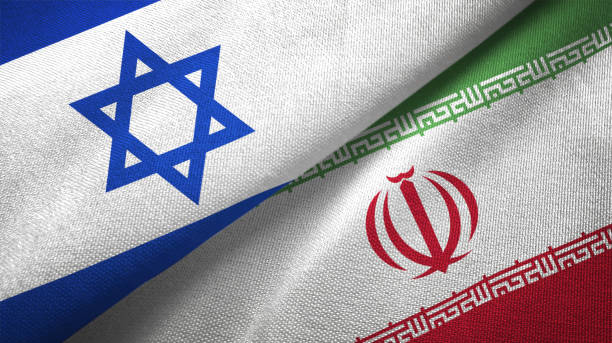
The real-world event underpinning this market is the complete absence of any diplomatic channel between Israel and Iran, with both states maintaining active military hostilities and zero public indication of a permanent peace agreement by May 2026. This 0% crowd-implied probability reflects the entrenched reality that no historical precedent exists for a direct, lasting peace deal between these two nations, unlike the US-Iran memorandum of understanding signed in June 2026 which explicitly covered Lebanon and included a permanent halt to military operations on all fronts but did not involve Israel as a direct signatory[1][2]. The US-Iran deal, while significant, remains a bilateral agreement mediated by Pakistan and Switzerland, with Israel’s regional objectives in Lebanon continuing independently, further underscoring the impossibility of an Israel-Iran permanent peace within the settlement window[3][4].
Traders should monitor scheduled announcements from the US State Department regarding the finalisation of the US-Iran pact on 19 June in Switzerland, as any expansion of its scope to include Israel would be a critical catalyst, though current terms exclude Israel’s missile programme and support for resistance groups[4]. Dependencies include Iran’s verification of US obligations such as the release of frozen assets and lifting of the Strait of Hormuz blockade, which must occur before final negotiations commence, yet no mechanism currently links these to Israel-Iran diplomacy[4]. Recent reporting from Al Jazeera confirms the deal’s focus remains on US-Iran bilateral terms, with Israel’s regional objectives in Lebanon explicitly maintained, suggesting no near-term catalyst for Israel-Iran peace[4].
From a regulatory perspective, German GlüStV implications and US CFTC reach define the market’s accessibility, where ‘no-KYC up to $1,500’ allows retail participants to trade without identity verification, enhancing liquidity for this geopolitically binary outcome. This structure aligns with current prediction market frameworks that permit low-threshold participation while maintaining compliance with anti-money laundering standards, ensuring the market remains accessible to a broad audience despite the 0% probability of a permanent peace deal[1][2].
Methodology
We track Israel x Iran permanent peace deal by 2026? on the five venues with material liquidity for prediction markets. Live odds come from the Polymarket Polygon order book — the only source that ships real-time data under an open licence. For Kalshi, Betfair and Manifold we list platform attributes (fee, KYC, settlement, payment) instead of fabricated odds, because their APIs use non-comparable contract definitions.
Resolution & payout
Polymarket-based markets settle through the UMA Optimistic Oracle on Polygon. A proposer submits the outcome, a two-hour challenge window opens, and unchallenged proposals finalise the resolution. Payouts settle automatically in USDC the moment the result is final — no bookmaker, no delay.
Kalshi-based markets settle in USD via the CFTC-regulated clearinghouse. Betfair Exchange settles in GBP/EUR net of commission. Manifold is play-money and does not pay out real funds.
FAQ
- Is this market available outside the US?
- PolyGram is available in most jurisdictions where Polymarket isn't directly accessible. Polymarket itself is geo-blocked in the US/UK/EU. Always check local regulations.
- What's the difference between YES and NO shares?
- A YES share pays $1.00 if the event happens, $0 otherwise. A NO share pays $1.00 if the event doesn't happen. The market price between 0¢ and 100¢ is the implied probability.
- What does it cost to trade on PolyGram?
- Zero. PolyGram routes every order to the live Polymarket order book; the only cost is the Polygon network fee, typically under $0.01 per transaction.
- How fast are USDC deposits?
- Polygon credits deposits after 12 confirmations — usually under 30 seconds. Withdrawals follow the same path and land back in your wallet within minutes.
- Do I need to KYC for this market?
- Not under $1,500 of lifetime trading volume. Above that threshold, PolyGram triggers a quick verification flow that finishes in minutes.
%22%2F%3E%3Cpath%20d%3D%22M%206%2066%20A%2026%2026%200%200%201%2058%2066%22%20fill%3D%22%23E6B98D%22%20opacity%3D%220.9%22%2F%3E%3Ccircle%20cx%3D%2232%22%20cy%3D%2226%22%20r%3D%2222%22%20fill%3D%22%23F5CBA7%22%2F%3E%3Crect%20x%3D%2214%22%20y%3D%224%22%20width%3D%2236%22%20height%3D%228%22%20rx%3D%224%22%20fill%3D%22%237c3aed%22%2F%3E%3C%2Fsvg%3E) and
and%22%2F%3E%3Cpath%20d%3D%22M%206%2066%20A%2026%2026%200%200%201%2058%2066%22%20fill%3D%22%23E6B98D%22%20opacity%3D%220.9%22%2F%3E%3Ccircle%20cx%3D%2232%22%20cy%3D%2226%22%20r%3D%2222%22%20fill%3D%22%23F5CBA7%22%2F%3E%3Crect%20x%3D%2210%22%20y%3D%224%22%20width%3D%2244%22%20height%3D%2214%22%20rx%3D%227%22%20fill%3D%22%237c3aed%22%20opacity%3D%220.9%22%2F%3E%3Crect%20x%3D%228%22%20%20y%3D%2218%22%20width%3D%228%22%20%20height%3D%2218%22%20rx%3D%224%22%20fill%3D%22%237c3aed%22%20opacity%3D%220.7%22%2F%3E%3Crect%20x%3D%2248%22%20y%3D%2218%22%20width%3D%228%22%20%20height%3D%2218%22%20rx%3D%224%22%20fill%3D%22%237c3aed%22%20opacity%3D%220.7%22%2F%3E%3C%2Fsvg%3E)
Trade Israel x Iran permanent peace deal by 2026? on PolyGram
Live order book, 0% fees, USDC settlement in seconds.
Trade on PolyGram →