Platform comparison
| Platform | YES odds | NO odds | Fee | KYC | Settlement | |
|---|---|---|---|---|---|---|
PolyGram Pick polygram.ink |
2% | 98% | 0% (USDC on-chain) | No-KYC up to $1,500 | USDC, auto via UMA oracle | Open on PolyGram → |
Polymarket polymarket.com |
2% | 98% | 0% | Geo-blocked in US/UK/EU | USDC, on-chain | Open on PolyGram → |
Kalshi kalshi.com |
— | — | Up to 7% per trade | US-only, KYC required | USD | Open on PolyGram → |
Betfair Exchange betfair.com |
— | — | 2-5% commission | Full KYC from first trade | GBP / EUR | Open on PolyGram → |
Manifold Markets manifold.markets |
— | — | Play-money (mana) | None — play-money | Mana (no cash-out) | Open on PolyGram → |
Live odds for Polymarket-based markets come from the Polygon order book. Non-Polymarket venues show attributes only; clicking any row opens the market on PolyGram.
Active sub-markets
Market context
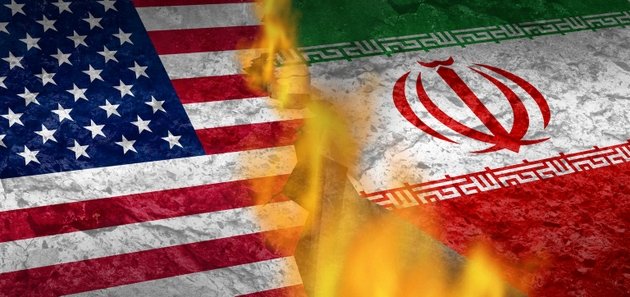
The real-world event centres on whether President Trump or the US government will publicly declare that no ceasefire between the United States and Iran remains in effect before June 2026. Recent history shows a fragile but active ceasefire: on 21 April 2026, Trump extended it indefinitely pending negotiations, and on 12 June, both sides agreed to a further 60-day extension, with a formal memorandum of understanding signed on 17 June to end the war and reopen the Strait of Hormuz[3]. An initial deal was announced on 14 June, with Pakistan mediating and a signing ceremony scheduled in Switzerland on 19 June, confirming an immediate halt to hostilities on all fronts including Lebanon[1][2]. Given this trajectory, the current 2% crowd-implied probability that a ceasefire will be officially terminated appears low, as no recent announcement suggests the US is abandoning the agreement.
Traders should monitor official statements from Trump, the US State Department, or the Pentagon regarding any revocation of the ceasefire, as well as the outcome of broader negotiations on Iran’s nuclear programme, which remain unresolved and could extend beyond the 60-day window[2][4]. Key dependencies include whether Iran complies with nuclear constraints and whether sanctions relief is granted, as failure on either front might prompt the US to withdraw from the ceasefire commitment[3]. A recent BBC report noted Trump urging negotiators “not to rush” into a deal, suggesting caution but not abandonment[6]. No official announcement has yet indicated the ceasefire is no longer in effect, making a “Yes” resolution unlikely absent a sudden policy shift.
From a regulatory perspective, this market operates under German GlüStV rules and US CFTC oversight, with accessibility enhanced by “no-KYC up to $1,500” provisions that allow smaller traders to participate without identity verification. While not legal advice, these frameworks ensure compliance while maintaining market access for retail participants. The settlement window closes on 30 June 2026, and any qualifying statement must explicitly confirm the ceasefire is no longer active, including a US declaration that it is no longer committed to the agreement.
Methodology
This page is a comparison snapshot: one live quote (Polymarket), four reference venues with their key attributes, and a single execution path — every trade button routes to PolyGram, which mirrors the Polymarket order book directly.
Resolution & payout
At resolution the UMA oracle takes over: a proposer posts the outcome with a bond, any token holder can dispute within two hours. Without dispute the result is accepted and the smart contract distributes USDC instantly.
On Kalshi (CFTC-regulated) resolution runs through their in-house clearing engine in USD. Betfair Exchange settles after match end in the account's local currency. Manifold pays no cash — only its in-platform "mana" currency.
FAQ
- Where can I trade this market with the lowest fees?
- On PolyGram, which mirrors the Polymarket order book at 0% fees. Kalshi charges up to 7% per trade; Betfair Exchange takes 2-5% commission on net winnings.
- How does resolution work?
- Through the UMA Optimistic Oracle on Polygon: a proposer submits the outcome, a two-hour challenge window opens, and USDC payouts settle automatically once the result is final.
- What's the difference between YES and NO shares?
- A YES share pays $1.00 if the event happens, $0 otherwise. A NO share pays $1.00 if the event doesn't happen. The market price between 0¢ and 100¢ is the implied probability.
- How fast are USDC deposits?
- Polygon credits deposits after 12 confirmations — usually under 30 seconds. Withdrawals follow the same path and land back in your wallet within minutes.
- How reliable are the quoted odds?
- The YES/NO percentages are the live mid-prices of the Polymarket order book. On deep markets they move every few seconds; on thinner ones you'll see short plateaus.
%22%2F%3E%3Cpath%20d%3D%22M%206%2066%20A%2026%2026%200%200%201%2058%2066%22%20fill%3D%22%23E6B98D%22%20opacity%3D%220.9%22%2F%3E%3Ccircle%20cx%3D%2232%22%20cy%3D%2226%22%20r%3D%2222%22%20fill%3D%22%23F5CBA7%22%2F%3E%3Crect%20x%3D%2214%22%20y%3D%224%22%20width%3D%2236%22%20height%3D%228%22%20rx%3D%224%22%20fill%3D%22%237c3aed%22%2F%3E%3C%2Fsvg%3E) and
and%22%2F%3E%3Cpath%20d%3D%22M%206%2066%20A%2026%2026%200%200%201%2058%2066%22%20fill%3D%22%23E6B98D%22%20opacity%3D%220.9%22%2F%3E%3Ccircle%20cx%3D%2232%22%20cy%3D%2226%22%20r%3D%2222%22%20fill%3D%22%23F5CBA7%22%2F%3E%3Crect%20x%3D%2210%22%20y%3D%224%22%20width%3D%2244%22%20height%3D%2214%22%20rx%3D%227%22%20fill%3D%22%237c3aed%22%20opacity%3D%220.9%22%2F%3E%3Crect%20x%3D%228%22%20%20y%3D%2218%22%20width%3D%228%22%20%20height%3D%2218%22%20rx%3D%224%22%20fill%3D%22%237c3aed%22%20opacity%3D%220.7%22%2F%3E%3Crect%20x%3D%2248%22%20y%3D%2218%22%20width%3D%228%22%20%20height%3D%2218%22%20rx%3D%224%22%20fill%3D%22%237c3aed%22%20opacity%3D%220.7%22%2F%3E%3C%2Fsvg%3E)
Trade Trump announces US x Iran ceasefire over by 2026? on PolyGram
Live order book, 0% fees, USDC settlement in seconds.
Trade on PolyGram →