Platform comparison
| Platform | YES odds | NO odds | Fee | KYC | Settlement | |
|---|---|---|---|---|---|---|
Polymarket (via Polymarket Germany Legal) Pick polygram.ink (preferred broker) |
26% | 74% | 0% (USDC on-chain) | No-KYC up to $1,500 | USDC, auto via UMA oracle | View on Polymarket → |
Polymarket (direct) polymarket.com |
26% | 74% | 0% | Geo-blocked in US/UK/EU | USDC, on-chain | View on Polymarket → |
Kalshi kalshi.com |
— | — | Up to 7% per trade | US-only, KYC required | USD | View on Polymarket → |
Betfair Exchange betfair.com |
— | — | 2-5% commission | Full KYC from first trade | GBP / EUR | View on Polymarket → |
Manifold Markets manifold.markets |
— | — | Play-money (mana) | None — play-money | Mana (no cash-out) | View on Polymarket → |
Outcome probabilities
Current market-implied probability for each outcome, from the live order book.
| Outcome | Probability |
|---|---|
| December 31 | 26% |
| August 31 | 20% |
| July 31 | 14% |
| July 17 | 9% |
Market context
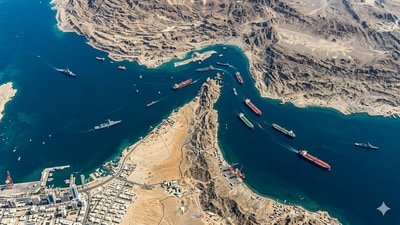
The United States has not yet imposed or collected transit fees, tolls, or protection payments from shipping companies or foreign governments for passage through the Strait of Hormuz, though the concept has surfaced periodically in policy discussions. This market tests whether such a scheme materialises by end of 2026. The mechanism could take several forms: a direct toll levied on vessels, a reimbursement demand from allied nations for US naval presence, or a negotiated arrangement with shipping consortia. The 13% implied probability reflects scepticism about implementation within the timeframe, grounded in the absence of formal legislative authority, international maritime law constraints, and the diplomatic friction such a unilateral move would generate.
Historical precedent offers limited guidance. The US has never systematically charged for Strait of Hormuz transit or protection, though it has negotiated cost-sharing arrangements with regional partners for military operations elsewhere. The Trump administration explored various revenue mechanisms during 2017–2021, including discussions of Gulf state contributions to US military presence, but none crystallised into formal Hormuz transit fees. The Biden administration has prioritised coalition-building and freedom-of-navigation operations over fee collection. Any shift would require either congressional legislation or an executive order asserting authority over international waters, both politically contentious.
Traders should monitor announcements from the Department of State, Department of Defense, and Congress regarding Strait security policy, particularly any budget proposals or strategic reviews released in 2025–2026. Recent statements from regional allies about burden-sharing, and any escalation in Houthi or Iranian activity that might prompt US policy recalibration, could alter the calculus. Regulatory clarity matters: under German GlüStV and US CFTC reach, this market remains accessible to traders globally with no-KYC entry up to $1,500 equivalent, though settlement hinges on verifiable US government payment collection.
Methodology
This overview of US charges Hormuz fees by 2026? reviews the four comparable platforms from a regulatory perspective: which is accessible in your jurisdiction, where KYC kicks in, how the platform is classified by your country of residence. Live probability is the Polymarket mid; comparison columns show regulatory status, KYC thresholds and settlement options for each platform.
Resolution & payout
On Polymarket, resolution runs on-chain via UMA Optimistic Oracle. USDC payout is instant and automatic, with no KYC. Tax treatment depends on your jurisdiction — in the US, gains are usually ordinary income; in the UK, often capital gains. Consult a tax professional for your situation.
FAQ
- Is Polymarket legal in my country?
- Polymarket is geo-blocked in the US/UK/EU. Actual usage via the Polymarket interface is not possible there. The legal status itself varies — many countries treat prediction markets as a gray area. Polymarket Germany Legal has a different geo footprint.
- How are winnings taxed?
- Tax treatment varies by jurisdiction. In most countries, prediction market gains are treated as ordinary income or capital gains. We cannot provide tax advice — consult a tax professional for your specific situation.
- What happens during a tax audit?
- You're responsible for documenting your trades. Polymarket Germany Legal exports a full transaction history (CSV/PDF) for tax reporting. In an audit you'll need to present these documents.
- Are prediction markets gambling?
- Legally unclear in most jurisdictions. Some interpretations classify them as wagering (gambling regulation applies), others as derivatives (financial regulation applies). There's no global precedent specifically for on-chain prediction markets.
- What if regulation changes?
- If regulation changes in your jurisdiction (e.g. prediction markets are banned), Polymarket Germany Legal would geo-block the affected region and continue processing withdrawals. Your funds remain withdrawable at any time.
%22%2F%3E%3Cpath%20d%3D%22M%206%2066%20A%2026%2026%200%200%201%2058%2066%22%20fill%3D%22%23E6B98D%22%20opacity%3D%220.9%22%2F%3E%3Ccircle%20cx%3D%2232%22%20cy%3D%2226%22%20r%3D%2222%22%20fill%3D%22%23F5CBA7%22%2F%3E%3Crect%20x%3D%2214%22%20y%3D%224%22%20width%3D%2236%22%20height%3D%228%22%20rx%3D%224%22%20fill%3D%22%237c3aed%22%2F%3E%3C%2Fsvg%3E) and
and%22%2F%3E%3Cpath%20d%3D%22M%206%2066%20A%2026%2026%200%200%201%2058%2066%22%20fill%3D%22%23E6B98D%22%20opacity%3D%220.9%22%2F%3E%3Ccircle%20cx%3D%2232%22%20cy%3D%2226%22%20r%3D%2222%22%20fill%3D%22%23F5CBA7%22%2F%3E%3Crect%20x%3D%2210%22%20y%3D%224%22%20width%3D%2244%22%20height%3D%2214%22%20rx%3D%227%22%20fill%3D%22%237c3aed%22%20opacity%3D%220.9%22%2F%3E%3Crect%20x%3D%228%22%20%20y%3D%2218%22%20width%3D%228%22%20%20height%3D%2218%22%20rx%3D%224%22%20fill%3D%22%237c3aed%22%20opacity%3D%220.7%22%2F%3E%3Crect%20x%3D%2248%22%20y%3D%2218%22%20width%3D%228%22%20%20height%3D%2218%22%20rx%3D%224%22%20fill%3D%22%237c3aed%22%20opacity%3D%220.7%22%2F%3E%3C%2Fsvg%3E)
Trade US charges Hormuz fees by 2026? on Polymarket Germany Legal
Live order book, 0% fees, USDC settlement in seconds.
Open live market →