Platform comparison
| Platform | YES odds | NO odds | Fee | KYC | Settlement | |
|---|---|---|---|---|---|---|
Polymarket (via Polymarket Germany Legal) Pick polygram.ink (preferred broker) |
46% | 54% | 0% (USDC on-chain) | No-KYC up to $1,500 | USDC, auto via UMA oracle | View on Polymarket → |
Polymarket (direct) polymarket.com |
46% | 54% | 0% | Geo-blocked in US/UK/EU | USDC, on-chain | View on Polymarket → |
Kalshi kalshi.com |
— | — | Up to 7% per trade | US-only, KYC required | USD | View on Polymarket → |
Betfair Exchange betfair.com |
— | — | 2-5% commission | Full KYC from first trade | GBP / EUR | View on Polymarket → |
Manifold Markets manifold.markets |
— | — | Play-money (mana) | None — play-money | Mana (no cash-out) | View on Polymarket → |
Outcome probabilities
Current market-implied probability for each outcome, from the live order book.
| Outcome | Probability |
|---|---|
| December 31 | 46% |
| September 30 | 30% |
| August 31 | 24% |
| August 18 | 20% |
| August 13 | 9% |
| July 31 | 2% |
| June 30 | 0% |
Market context
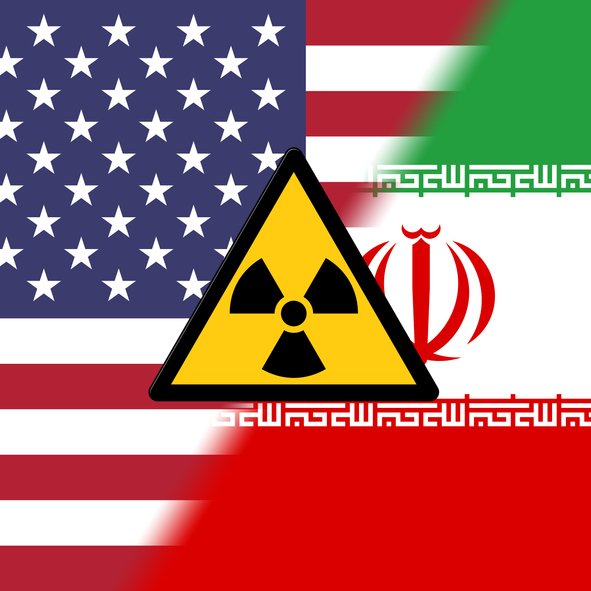
The underlying real-world event is a newly signed initial agreement between the United States and Iran, finalised by President Donald Trump on 17 June 2026, which mandates Tehran to reduce its highly enriched uranium stockpile and suspends US-imposed sanctions while reopening the Strait of Hormuz for toll-free passage[1]. This interim pact establishes a 60-day window for negotiations on Iran’s nuclear programme, though Trump retains the option to resume military action if commitments are not upheld[1]. The deal aims for a permanent cessation of hostilities and restores pre-war discussions, including the reopening of vital maritime routes that had triggered a global energy crisis[1].
Historically, comparable cases such as the 2015 Joint Comprehensive Plan of Action (JCPOA) frame how to interpret the current 0% crowd-implied probability for a final deal by August 2026[1]. The 2015 deal only lifted specific sanctions in exchange for significant uranium reductions, whereas the current agreement exceeds it by promising broader sanctions removal and asset releases tied to progress[1]. Yet, unresolved issues persist, including the status of Iran’s enriched uranium reserves and the precise scope of sanctions relief, mirroring past diplomatic fragility where key elements remained unconfirmed or contested[4]. Traders should note that while Iranian media claimed a $12 billion asset release, US officials deny this, highlighting the volatility in expectations[4].
Key catalysts include the scheduled signing of the Memorandum of Understanding (MOU) in Geneva on 19 June, which paved the way for technical talks on uranium stockpiles and enrichment capabilities[2]. Traders must monitor announcements regarding nuclear inspector access, as the IAEA has confirmed the MOU mandates supervision requiring inspections, though Iran initially denied new plans for UN visits[5]. Recent news from Al Jazeera (23 June 2026) reports ongoing disagreements on frozen assets and inspector access, with US Vice President JD Vance asserting Iran consented to IAEA entry while Iranian officials denied it the following day[4]. For market accessibility, German GlüStV implications and US CFTC reach remain relevant regulatory considerations, while the 'no-KYC up to $1,500' threshold allows traders to participate without identity verification, enhancing accessibility for this specific market despite legal complexities.
Methodology
This overview of US-Iran Final Nuclear Deal by…? reviews the four comparable platforms from a regulatory perspective: which is accessible in your jurisdiction, where KYC kicks in, how the platform is classified by your country of residence. Live probability is the Polymarket mid; comparison columns show regulatory status, KYC thresholds and settlement options for each platform.
Resolution & payout
On Polymarket, resolution runs on-chain via UMA Optimistic Oracle. USDC payout is instant and automatic, with no KYC. Tax treatment depends on your jurisdiction — in the US, gains are usually ordinary income; in the UK, often capital gains. Consult a tax professional for your situation.
FAQ
- Is Polymarket legal in my country?
- Polymarket is geo-blocked in the US/UK/EU. Actual usage via the Polymarket interface is not possible there. The legal status itself varies — many countries treat prediction markets as a gray area. Polymarket Germany Legal has a different geo footprint.
- Can I trade anonymously?
- Pseudonymously, yes — up to the KYC threshold. Polymarket Germany Legal stores an email address and wallet addresses rather than a legal name. Over $1,500 lifetime volume triggers KYC, after which identity is no longer anonymous.
- What happens during a tax audit?
- You're responsible for documenting your trades. Polymarket Germany Legal exports a full transaction history (CSV/PDF) for tax reporting. In an audit you'll need to present these documents.
- Are prediction markets gambling?
- Legally unclear in most jurisdictions. Some interpretations classify them as wagering (gambling regulation applies), others as derivatives (financial regulation applies). There's no global precedent specifically for on-chain prediction markets.
- Is there a withdrawal cap?
- No platform-side cap. You can withdraw any amount provided KYC is complete. SEPA bank withdrawals over €15,000 trigger additional anti-money-laundering checks (statutory obligation for all platforms).
%22%2F%3E%3Cpath%20d%3D%22M%206%2066%20A%2026%2026%200%200%201%2058%2066%22%20fill%3D%22%23E6B98D%22%20opacity%3D%220.9%22%2F%3E%3Ccircle%20cx%3D%2232%22%20cy%3D%2226%22%20r%3D%2222%22%20fill%3D%22%23F5CBA7%22%2F%3E%3Crect%20x%3D%2214%22%20y%3D%224%22%20width%3D%2236%22%20height%3D%228%22%20rx%3D%224%22%20fill%3D%22%237c3aed%22%2F%3E%3C%2Fsvg%3E) and
and%22%2F%3E%3Cpath%20d%3D%22M%206%2066%20A%2026%2026%200%200%201%2058%2066%22%20fill%3D%22%23E6B98D%22%20opacity%3D%220.9%22%2F%3E%3Ccircle%20cx%3D%2232%22%20cy%3D%2226%22%20r%3D%2222%22%20fill%3D%22%23F5CBA7%22%2F%3E%3Crect%20x%3D%2210%22%20y%3D%224%22%20width%3D%2244%22%20height%3D%2214%22%20rx%3D%227%22%20fill%3D%22%237c3aed%22%20opacity%3D%220.9%22%2F%3E%3Crect%20x%3D%228%22%20%20y%3D%2218%22%20width%3D%228%22%20%20height%3D%2218%22%20rx%3D%224%22%20fill%3D%22%237c3aed%22%20opacity%3D%220.7%22%2F%3E%3Crect%20x%3D%2248%22%20y%3D%2218%22%20width%3D%228%22%20%20height%3D%2218%22%20rx%3D%224%22%20fill%3D%22%237c3aed%22%20opacity%3D%220.7%22%2F%3E%3C%2Fsvg%3E)
Trade US-Iran Final Nuclear Deal by…? on Polymarket Germany Legal
Live order book, 0% fees, USDC settlement in seconds.
Open live market →